Well Pump Replacement in St George, UT
Well pump replacement in St George, UT. How a pump is sized to your well depth and water, what the swap involves, and when replacement beats repair.
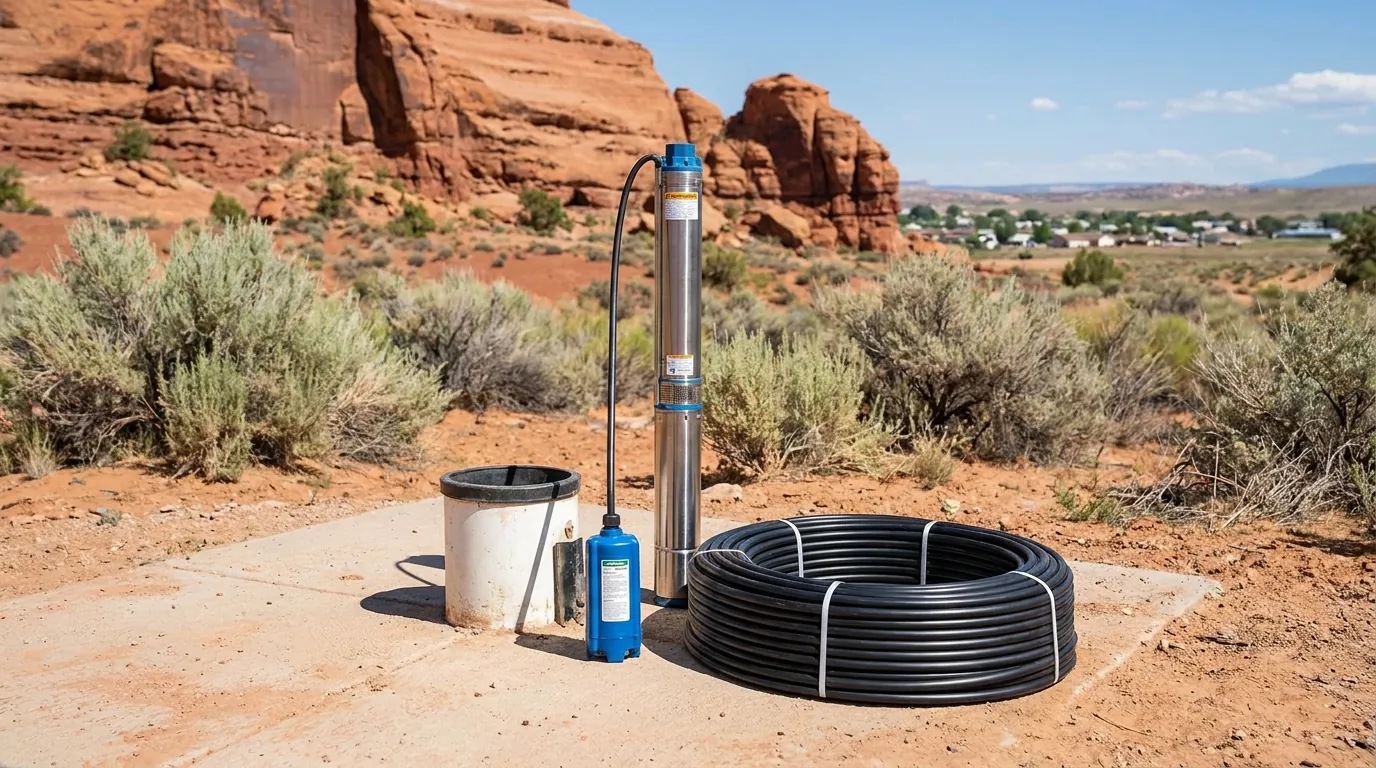
When a well pump has reached the end
Most well pumps give years of service, but every pump wears out eventually. When a motor has shorted, a pump has lost capacity from years of scale and grit, or repeated breakdowns are costing more than the pump is worth, replacement is the honest answer. Signs you are there include a pump that trips its breaker on start, repeated loss of pressure after recent repairs, sand in the water that keeps coming back, or a pump old enough that parts are getting hard to source.
A replacement is also a chance to right-size the system. If the original pump was undersized for the household, or oversized and short-cycling, we can match the new pump to your actual well depth and demand. Before we commit to a replacement, we confirm the pump is truly the problem with a proper well inspection, because a bad switch or waterlogged tank can imitate a dead pump.
What a replacement involves
Replacing a well pump is a staged job. Here is the sequence.
-
Measure the well
We confirm total depth, static water level, pump setting depth, and the size of the casing. These numbers decide the horsepower, flow rate, and wire size for the new pump.
-
Pull the old pump
The existing pump is lifted out on its drop pipe. We inspect the pipe, wiring, torque arrestor, and check valve as they come up — these are usually replaced rather than reused.
-
Set the new pump
The new pump is spliced, fitted with a fresh check valve, and lowered to the correct depth with new drop pipe and safety rope. Setting depth matters: too shallow risks drawing air, too deep wastes energy and strains the motor.
-
Pressurize and test
We wire the control, set the pressure switch and tank, run the system, and verify steady pressure, correct amperage, and clean water before we finish.
Why local water and depth drive the sizing
Across St George, Washington, Hurricane, and the towns up the Virgin River, well depth and water-table level vary widely from one property to the next. A deep well with a low static level needs a pump that can lift water a long way and still deliver usable pressure at the house; a shallower well needs a different pump entirely. Getting that match right is the difference between a pump that runs comfortably and one that strains and wears early.
Water chemistry matters too. The hard, alkaline, often sandy water common in this area affects which pump and components hold up best, since grit and scale are the main enemies of a submersible. In the colder northern towns, we also plan for freeze protection on the surface equipment. Once the new pump is in, routine pressure tank service keeps it from short-cycling and protects your investment.
Thinking about a new well pump?
Tell us your well's depth and what it's doing now, and we'll explain whether replacement makes sense and how the right pump would be sized.
Call to discuss your well and schedule an assessment.
Frequently asked questions
How do I know it's time to replace, not repair?
Age, the cost of the failed part relative to a new pump, and how often it's been failing all factor in. If the motor is gone on a pump already near the end of its life, replacement usually costs less over time than another repair.
How is the new pump sized?
We base it on your well depth, static water level, casing size, and household demand. The goal is enough flow and lift to serve the house without the pump straining or short-cycling.
Will you reuse the old drop pipe and wiring?
Usually not. Once the pump is pulled, replacing the drop pipe, wiring, and check valve is inexpensive insurance against a second pull soon after, so we recommend fresh components.
How long does a replacement take?
Most straightforward replacements are completed in a day. Very deep wells or difficult access take longer, and we'll give you a realistic window after we see the well.