Well Inspection in St George, UT
Well inspection in St George, UT. What a well and pump check covers, when to get one, and how local depth and water conditions shape the results.
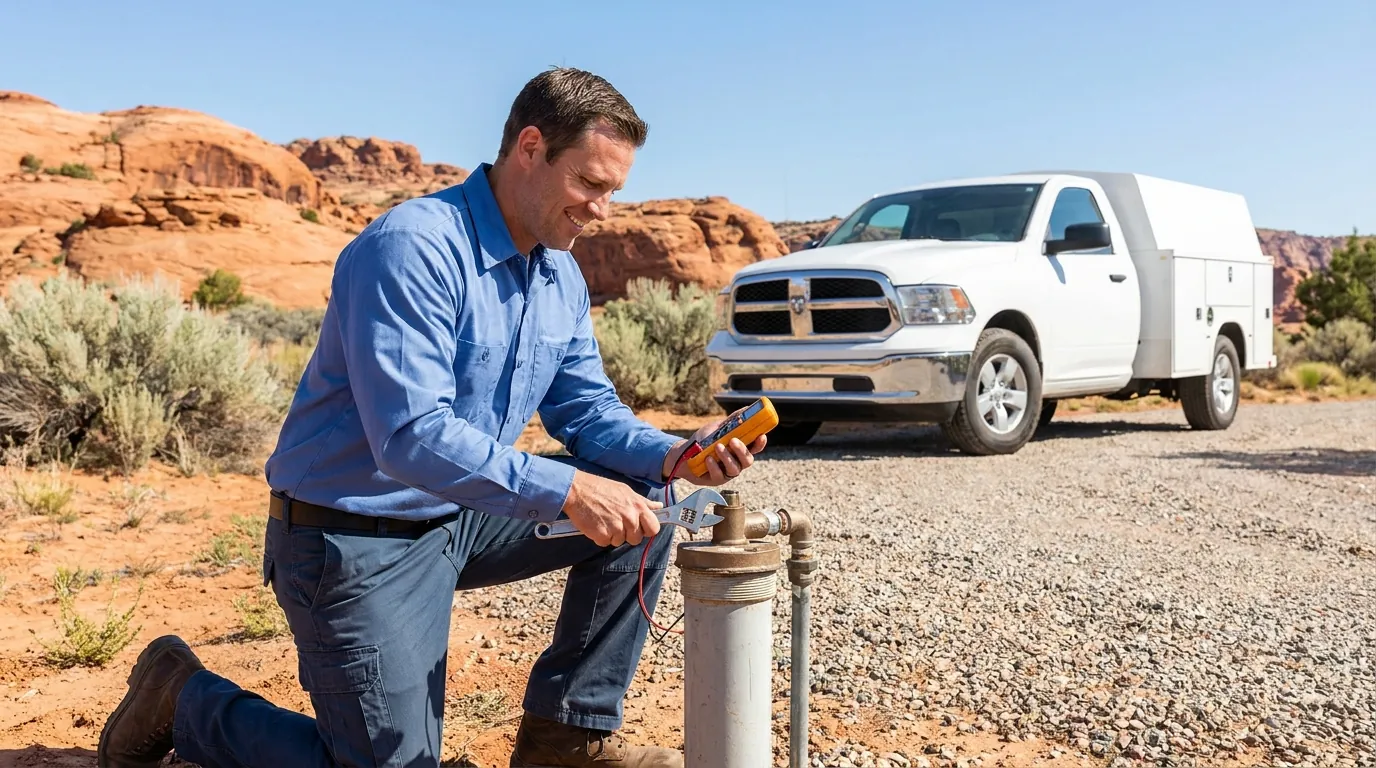
Know what your well is actually doing
A well inspection tells you the condition of the whole system before a small problem becomes a no-water emergency. People book one for a few reasons: they are buying or selling a home with a private well, they have intermittent symptoms they can't pin down, or the well has been running the same way for years and they want a baseline. Whatever the reason, the point is the same — to measure the system instead of guessing about it.
An inspection is also the right first step when symptoms are vague. If the pump might be failing, an inspection confirms it before you commit to a well pump replacement; if pressure is the complaint, it points you toward the real cause. Many owners searching for well drilling companies near me actually need an inspection and a pump service, not a new well.
What a well inspection measures
A thorough inspection covers the water, the pump, and the pressure system.
-
Flow and recovery
We measure how much water the well delivers and how quickly the level recovers after a draw. This tells us whether the well itself is keeping up with the household.
-
Pump and electrical
We test voltage, amperage, and pressure performance, and check the control box or switch. Readings outside the normal range flag a pump heading for trouble.
-
Pressure system
The tank air charge, bladder, switch settings, and gauge are checked, since these are common and inexpensive sources of symptoms.
-
Water quality basics and wellhead
We note visible sand, cloudiness, or air in the water and inspect the wellhead and cap for the intrusion points that let grit and surface water in.
Why inspections read differently here
Well depth, water-table level, and mineral content vary widely between St George, Washington, Hurricane, and the higher towns up the Virgin River, so there is no single 'normal' reading for the region. An inspection has to be interpreted against your specific well: a flow rate that's fine for a deep, strong well may be marginal for a shallower one. That local context is what turns raw numbers into a useful decision.
The area's hard, alkaline, often sandy water leaves its mark too — scale on components and grit in the water are things we look for specifically. In the colder northern towns, we check whether surface equipment is protected against a hard winter freeze. If the inspection turns up a problem, it feeds straight into a plan, whether that's well pump repair, a tank fix, or a replacement.
Want a clear picture of your well?
Whether you're buying a home on a private well or chasing a nagging symptom, an inspection gives you real numbers to act on. We serve St George and the surrounding towns.
Call to schedule a well inspection.
Frequently asked questions
When should I get a well inspection?
Before buying or selling a home on a private well, when you have symptoms you can't explain, or every few years as a baseline. An inspection catches problems while they're still small and cheap to fix.
Can an inspection tell me if the pump is about to fail?
It can flag the warning signs — abnormal amperage, dropping pressure performance, sand in the water, or a weak recovery rate. Those point to a pump that needs attention before it quits entirely.
Do you drill new wells?
Our focus is the pump and pressure side of the system — repair, replacement, and inspection. If your inspection shows the well itself has failed rather than the pump, we'll explain what you're looking at so you can plan the next step.
What does an inspection check about water quality?
We look at the basics a pump technician can observe on site — visible sand, cloudiness, air, and signs of scale — and inspect the wellhead for intrusion. Full lab testing of drinking water is a separate service through a water-testing lab.