Low Water Pressure Diagnosis in St George, UT
Low water pressure diagnosis in St George, UT. Why well pressure drops, how we trace the cause step by step, and what local water does to the system.
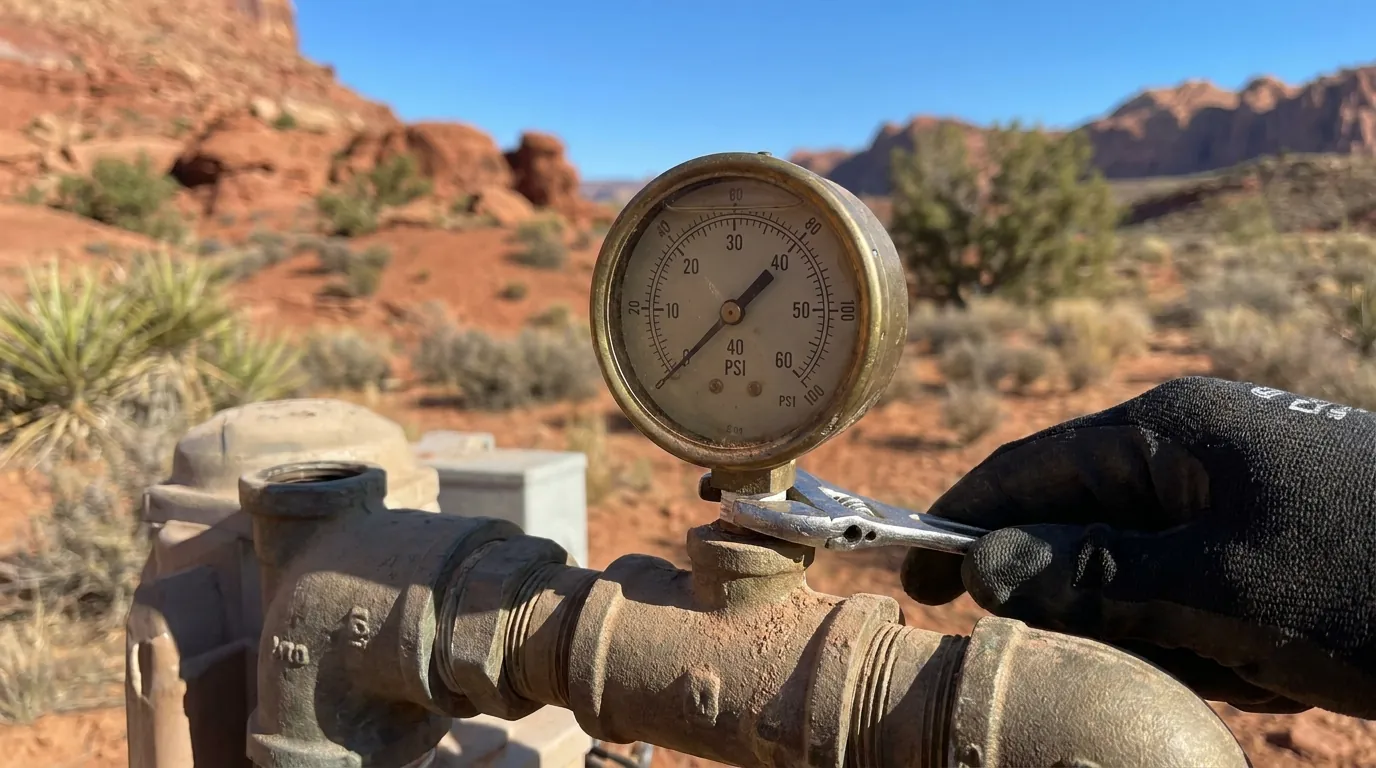
Low pressure has many causes
Weak water pressure from a well can come from a dozen places, and treating the wrong one wastes money. The pressure switch could be set low or clogged, the tank could be waterlogged, a filter could be fouled, the pump could be losing capacity, a check valve could be stuck, or the well itself could be struggling to keep up with demand. Because the symptom looks the same no matter the cause, diagnosis is about measuring the system in order until the weak link shows itself.
Low pressure is also an early warning. A pump that is slowly losing capacity often shows up as gradually weakening pressure long before it quits, which is why catching it early can mean a repair instead of an emergency. If we find the pump is the cause, we'll explain your options for well pump repair or replacement.
How we trace low pressure
We work from the easy, common causes toward the expensive ones.
-
Read the pressure settings
We check the cut-in and cut-out pressures at the switch and the tank's air charge. A switch set low or a waterlogged tank is a frequent, inexpensive fix.
-
Check filters and fixtures
A clogged whole-house filter, scaled aerators, or a failing softener can throttle pressure before it ever reaches the complaint. We rule these out early.
-
Test the pump's output
We measure what the pump is actually delivering under load. A pump that can't build or hold pressure is either worn or fighting a leak or stuck check valve in the drop pipe.
-
Assess the well's supply
If the pump is healthy, we look at whether the well is recovering fast enough to meet demand, especially during peak summer use when draw is highest.
What local conditions do to pressure
The hard, alkaline water across St George is a direct cause of creeping pressure loss. Scale builds inside pipes, on pump impellers, and across filters and fixtures, narrowing the path water travels and slowly choking flow. Sandy grit adds wear and can clog screens and switch ports. These are regional patterns we look for first because they're so common here.
Summer heat drives the other big factor: demand. During the hottest stretches, irrigation and household use peak together, and a well that recovers slowly can run short — pressure sags in the afternoon and recovers overnight. That pattern points to supply rather than equipment. In the colder northern towns, a partially frozen or restricted line can mimic low pressure in winter. Once we've isolated the cause, we often confirm the full picture with a well inspection so nothing is missed.
Pressure just isn't what it used to be?
Describe when the pressure drops and how it behaves, and we'll trace it to the real cause. We diagnose low pressure across St George and nearby towns.
Call to schedule a pressure diagnosis.
Frequently asked questions
Why did my water pressure drop suddenly?
A sudden drop often points to a waterlogged tank, a failed pressure switch, a stuck check valve, or a clogged filter. A gradual drop over weeks or months is more likely a pump losing capacity or scale building in the system.
Is low pressure a sign my pump is failing?
It can be. A pump slowly losing capacity shows up as weakening pressure before it quits, so it's worth checking rather than ignoring. It can also be a tank, switch, or filter issue, which is why we measure before concluding.
Why is my pressure worse in summer afternoons?
Peak irrigation and household demand can outpace a well that recovers slowly, so pressure sags when everyone is drawing water and recovers overnight. That usually points to the well's supply rather than the equipment.
Can hard water cause low pressure?
Yes. The hard, alkaline water here deposits scale in pipes, on impellers, and across filters and fixtures, gradually narrowing the flow path and reducing pressure over time.